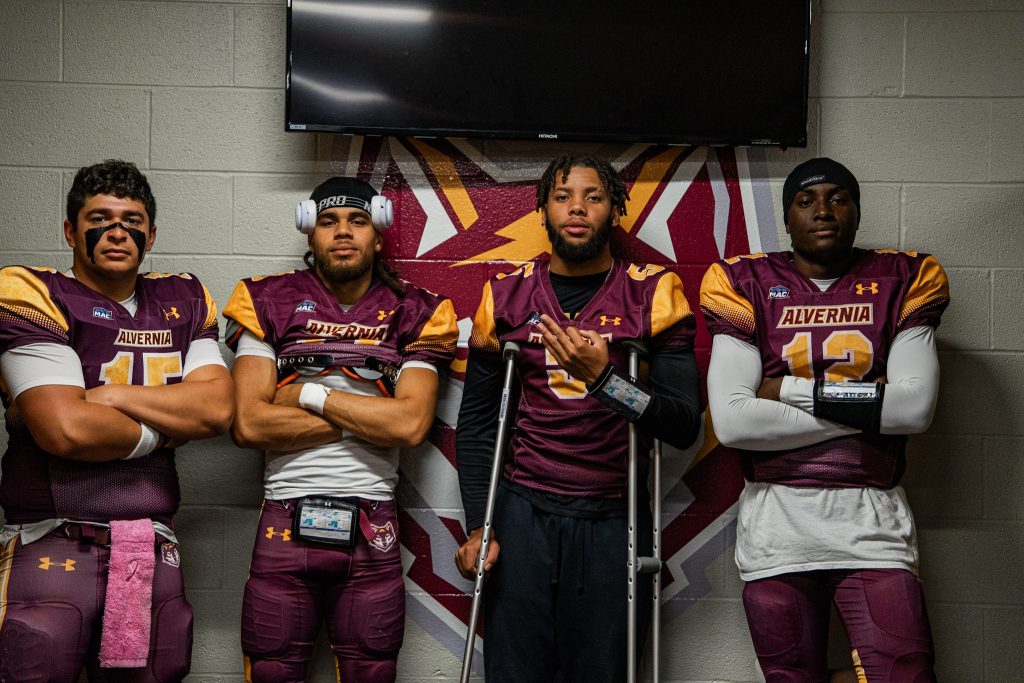
By Julius Timmons, Alvernia Community News Lab
Photo: Julius Timmons
Injuries have always been a part of college sports, and this is no different for the student-athletes at Alvernia University. However, the struggle that goes beyond the training room is often the one that is less talked about. Behind the injury, there is an intricate web of academic demands, emotional struggles, and team expectations. The issue of balancing recovery with college life has grown to the extent that many athletes feel it needs to be more acknowledged and understood.
Some athletes confessed that they are frequently pushed to the point of “toughing it out,” even when their bodies are sending them obvious signals that they need to rest. The impetus to do so sometimes comes from inside, being fueled by individual goals or a sense of honor. However, the pressure to be in a starting lineup or not to fall behind a more competitive group of teammates also accounts for the other side.
“You do not want to let the team down,” Robert Moore Jr a freshman football player said during rehab after a morning session. “But sometimes this means playing through pain that really needs treatment. By pretending it is not serious even when it actually is, you fool both others and yourself.”
This way of thinking is not only typical for one particular sport or the athletes of one specific team, but athletes from different teams agree that the culture of college sports includes the determination to go on, even in the case of an injury. The fear of being replaced, which is often unspoken, although coaches may advise recovering in a smart way, is quite severe for many students.
Injuries, which lead to practice absences, most of the time, also imply missing classes for student-athletes. Those who got injured and are on their way to recovery have expressed that they are facing the problem of physical therapy and homework, readings, group projects, and exam time management. Oftentimes, the rehab sessions are set in such a way that they coincide with the students’ academic obligations, thus creating the need for them to juggle between the commitments, which leads to additional stress.
“Trying to heal while staying academically eligible is really difficult,” a sophomore basketball player shared. “There are times when I come out exhausted from PT and still have a whole night of studying ahead of me. It seems like the day does not have enough hours.”
Even if there are support means such as tutors and academic advisors, a heavy workload is still reported by injured athletes, and the tasks can pile up very quickly. Besides pain, which is natural, along with medication and fatigue, the challenge to focus becomes increasingly difficult, thus turning what normally would be simple assignments into significant hurdles.
The emotional side of the story is most of the time underestimated by people who are outside the world of college sports. Those who got injured in the team usually describe the feeling of being left out by team members and losing connection with the rhythm of practices, games, and team bonding events. Seeing others compete, especially in the case of big games or meets, may, on one hand, encourage, but on the other, be a source of sadness.
“Injuries put you into this very strange state of waiting,” Joel Thomas a sophomore track athlete said. “You are still a member of the team, but not really. You want to be there, but instead, you are sitting on the bench and hoping that the day you will be yourself again will come.”
Sports psychologists indicate that fear is mainly responsible for athletes’ stress, including fear of reinjury, fear of disappointing the team, fear of losing skills or conditioning, as well as fear of missing long-term opportunities such as scholarships or leadership roles. A good number of athletes express the need for mental-health support that would be specifically designed for sports-related anxiety and recovery.
Although our school’s athletic trainers do everything within their power to keep student-athletes in good shape, some injuries caused by specialists or requiring long-term treatment are not easily accessible on campus. Getting a second opinion, scheduling an MRI scan, or securing an appointment with an orthopedic surgeon are among the tasks that can take weeks or require traveling, and thus, athletes are in a constant struggle to accomplish them.
“Especially when you are in pain, you want the answers immediately,” Joel Thomas said. “But sometimes the earliest appointment is two weeks away, and during that time, you are left wondering what is wrong.”
This waiting game can stall treatment and thus prolong recovery times, making athletes feel frustrated and uncertain.
Even though scholarships and school resources may be enough to cover one’s basic medical needs, they are not enough to cover everything. There are some extra physical therapy sessions, imaging scans, and follow-up appointments for which copays and fees that are not a part of the standard athletic care are necessary. The cost can become quite high for long-term injuries, putting lots of pressure on athletes and their families, especially those who do not have good insurance plans.
After athletes and coaches became more aware of the issue, they have started to agree on what kind of support the athletes need, in terms of mental-health services, clear recovery guidelines, and easier access to specialized medical care. Communication between academic departments and the athletic program is one of the things that some athletes dream of improving so that professors can understand the rehabilitation more.
“Injuries are inevitable in the game,”Roberty Moore stated, “but they should not be the cause of your entire college experience coming to a halt.”
The majority of student-athletes from the Alvernia campus consider healing not just as a comeback to competition, but also as a way of finding support, balance, and resilience through one of the toughest chapters in their athletic and academic careers.
You Might Also Like

Petruzzelli Named Warrior Hockey ECHL Goaltender of the Month for October

Albright to Add Women’s Flag Football as Varsity Sport in Spring 2027