By Charlotte Keith, Spotlight PA
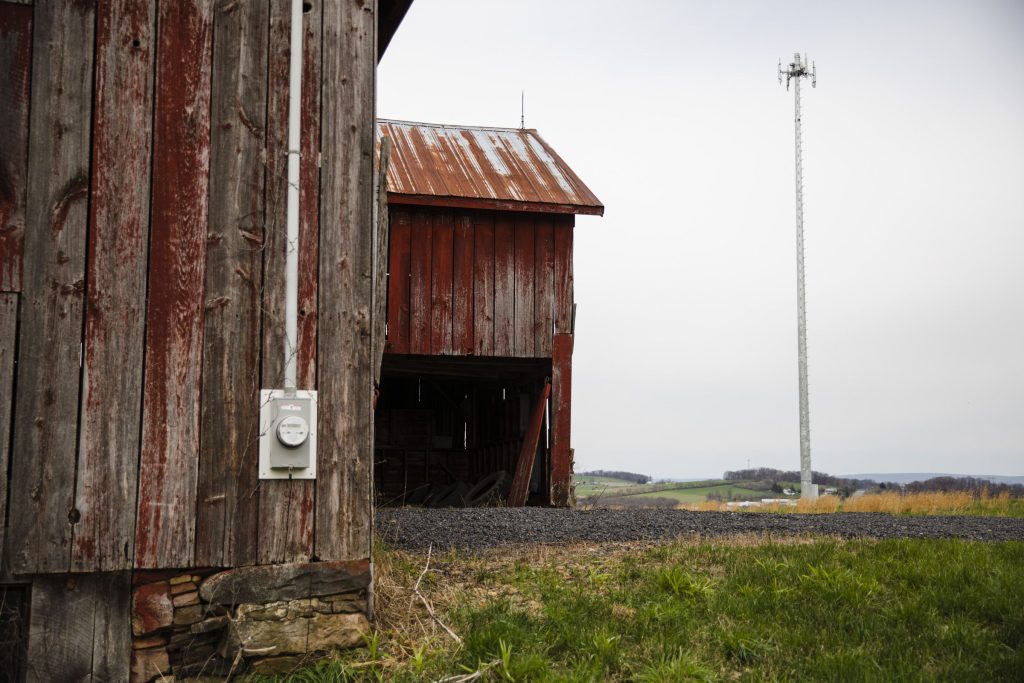
Pictured above: Broadband equipment in rural Pennsylvania. Photo courtesy of Amanda Berg / For Spotlight PA
Spotlight PA is an independent, nonpartisan, and nonprofit newsroom producing investigative and public-service journalism that holds power to account and drives positive change in Pennsylvania. Sign up for our free newsletters.
It’s been a year of sweeping and controversial changes for a huge federal broadband initiative.
The $42.45 billion program was created in 2021 with bipartisan support and an ambitious goal: bring high-speed internet access to every home and business in the U.S., no matter how remote.
Commerce Secretary Howard Lutnick, whose agency oversees the program, said in January that under the Biden administration, the program had become bogged down in red tape and “woke mandates.” He promised changes, pending a “rigorous review.”
Here are four things to know about what happened and where things stand:
Changes to key grant program
In June, the Trump administration announced major changes to the grant program.
The program originally prioritized projects that use fiber-optic cables, citing a need to ensure that the networks ultimately offer faster speeds to meet the needs of the future. Federal officials argued this relegated other technologies, like wireless and satellite internet, to “third-tier status” — even though they are often cheaper and faster to build.
Lutnick said the new rules will ensure taxpayers receive the best value for their money and get people connected more quickly. But critics argued the overhaul short-changes rural residents by favoring technologies that are cheaper upfront but unable to keep up with future demand for higher speeds.
Another change loosened a requirement that internet service providers that receive grants offer an affordable subscription option for low-income residents.
Digital skills grants scrapped
In May, the Trump administration abruptly canceled a separate, $2.5 billion grant program intended to teach digital skills and make getting online affordable. President Donald Trump called it “racist” and “wholly unconstitutional.”
In Pennsylvania, the canceled funding included more than $25 million for the state Broadband Development Authority and almost $12 million for the city of Philadelphia to teach digital skills and provide free or low-cost internet subscriptions. A grant to the Department of Human Services to help residents of 10 rural counties in northern Pennsylvania use telehealth was also terminated.
The move was part of a wider federal crackdown on diversity, equity, and inclusion efforts. The canceled broadband program aimed to help a range of groups who face challenges using the internet, including older adults, veterans, and low-income households, as well as racial and ethnic minorities. Almost 80% of Pennsylvanians fall into at least one of these categories, state documents show.
A lawsuit challenging the administration’s legal authority to cancel the funding is pending in federal court.
Shift towards satellite
In August, Pennsylvania announced which companies would receive grants.
Under the state’s proposal, roughly two-thirds of eligible locations in the commonwealth will be connected to the internet via fiber-optic cables, while another 18% will be served by satellite providers, and 13% will receive wireless internet.
It’s hard to say exactly what difference the changes made in Pennsylvania, but it’s clear that they opened the door for satellite to play a larger role.
When scoring applications, officials at Pennsylvania’s Broadband Development Authority prioritized projects they deemed capable of delivering broadband speeds even in areas with heavy tree cover, steep slopes, or low population density.
“Non-priority” projects were considered only when no priority projects applied to serve a particular area, or when priority ones were too expensive, a spokesperson for the Department of Community and Economic Development said. No satellite projects were designated “priority.”
Uncertainty over leftover millions
In addition to the shift toward satellite and wireless internet, fewer locations are eligible — both because of the rule changes and because more broadband has been built since the infrastructure law passed in 2021.
As a result, Pennsylvania will be able to connect all the eligible locations in the commonwealth for only $790.7 million, rather than spending its $1.1 billion allocation as originally planned.
States were originally allowed to spend any leftover money to help residents get online through digital skills training or providing free laptops, among other things. But that guidance was rescinded, and in December, Trump issued an executive order that ties the funding to a federal review of state laws regulating artificial intelligence. The executive order directs the Commerce Department to identify “onerous” state laws and says those states will not be able to keep their leftover broadband funds.
BEFORE YOU GO… If you learned something from this article, pay it forward and contribute to Spotlight PA at spotlightpa.org/donate. Spotlight PA is funded by foundations and readers like you who are committed to accountability journalism that gets results.
You Might Also Like