By Stephen Reyes
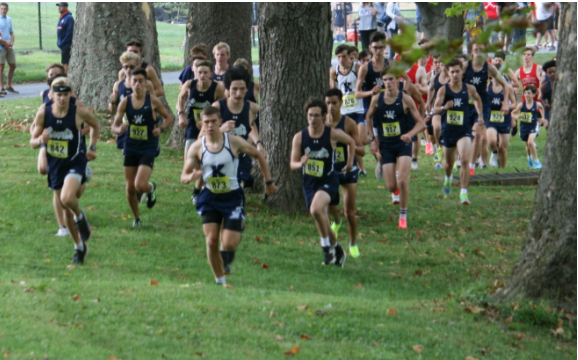
Photo courtesy of Jason Brown
When the cross country team laces up before sunrise, there’s no crowd, no band, no cheerleaders. Just steady footsteps, the rhythm of breathing, and a quiet determination to push farther than yesterday. It may not have the Friday night lights of football or the packed bleachers of basketball, but cross country — and all high school sports — deserve our support.
Sports are not just games. They are classrooms without walls. They teach grit, resilience, and teamwork in ways that books alone cannot. As Freshman Francesca Szor told me, “I used to give up incredibly easily, and whenever something was hard, I would just give up right away, but ever since being in cross country, I’ve learned that you can’t get through life like that, and you have to learn how to keep pushing through even when you are in discomfort.” That’s a lesson that carries far beyond the course.
Cross country, in particular, is a sport of persistence. Runners face hills, weather, and exhaustion, often with little fanfare. The reward is not only a medal or a fast time but also the knowledge that they pushed themselves past what seemed possible. That kind of mindset prepares students for life’s challenges, whether it’s the next exam, a job interview, or the hurdles that inevitably come after graduation.
The benefits extend well past personal growth. Student-athletes are often healthier, more disciplined, and more focused in their academics. Graduated track athlete Evangeline Reyes said, “You’re constantly moving, and you also learn to prioritize healthy nutrition.”These are habits that build strong students today and strong adults tomorrow. The evidence backs it up: study after study shows that students who participate in athletics are more likely to stay engaged in school and succeed academically.
And while cross country doesn’t always draw a crowd, the sense of community it builds is powerful. Meets bring together parents, friends, and teammates who cheer just as loudly for the last finisher as the first. Wyomissing Head Coach Tim Hetrich said, “It builds camaraderie. We have so much competition, but this is camaraderie.” That spirit of belonging is something every young person deserves.
Of course, cross country is just one example. Football, volleyball, basketball, soccer — every sport offers its own lessons and opportunities. Some athletes discover leadership skills as team captains. Others gain the confidence to perform under pressure. For a few, sports open the door to scholarships and higher education. But for all, the value is in the character built along the way.
Still, there are critics who argue that athletics take resources away from academics or that only the big-ticket sports matter. That misses the point. Sports and academics aren’t rivals — they’re partners. The discipline to train, the ability to handle pressure, the experience of working toward a common goal — all of these skills flow directly into the classroom.
So how can someone get involved? The good news is, it doesn’t take much. Show up. You don’t need to know the rules of cross country or the strategy behind volleyball to cheer. Bring a friend to a meet, buy a ticket to a game, or just stand on the sidelines with a cup of coffee on a Saturday morning. Asher Madison, Senior student athlete for Conrad Weiser High School, suggested, “look on your local high school’s website, find the next football game. Football is probably the most fun to watch.” These moments matter to the athletes, and your presence makes a difference. If you want to go further, volunteer to help with concessions, donate equipment, or simply share the team’s schedule with neighbors. Every bit of support builds momentum.
High school sports — whether it’s cross country, soccer, basketball, or volleyball — are investments in our students’ futures. They create confident, capable young people who know how to lead, how to fail, and how to get back up again. They knit our communities together, reminding us that we’re not just cheering for athletes, but for students who will carry these lessons into every part of their lives.
So the next time the cross country team lines up at a trailhead, or the Football team takes the field, I hope more of us are there — not just to cheer, but to show that we value what these athletes bring to our schools and our community. Supporting high school sports means supporting the lessons, the opportunities, and the futures of the students who give it their all every day.
“More Than a Game: The Value of High School Sports” was originally published on Oct. 15, 2025,in Front Street Journal, the student newspaper of Reading Area Community College. The story won second place in the Keystone Media Awards sports category. For more stories from the Front Street Journal, visit frontstreetjournal.com.
You Might Also Like

Dirt Track Racing with Harry “Wild Thing” Turner | Strapped In

Reading Royals Re-Sign Nolan Burke, Ian Shane for 2026-27 Season