By Danielle Smith, Keystone State News Service
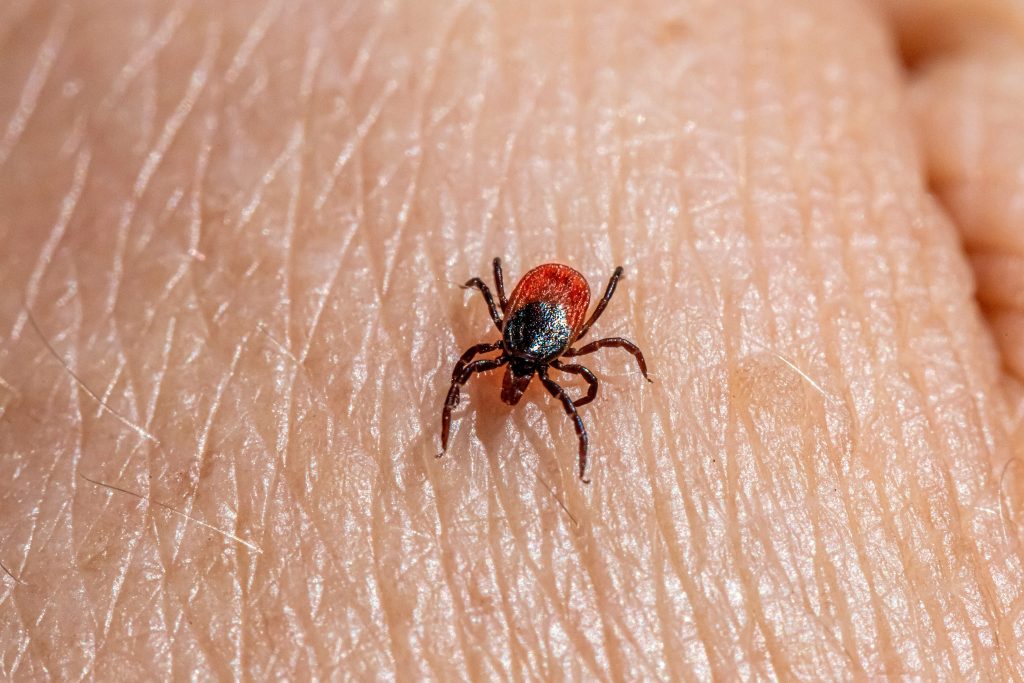
Photo courtesy of Erik Karits on Unsplash
As ticks spread in Pennsylvania, local health officials and educators are warning residents to take extra steps to prevent tick bites that could lead to tick-borne disease.
Pennsylvania is one of many states where the risk of ticks and mosquitoes is elevated each summer.
Erika Machtinger, associate professor of entomology at Pennsylvania State University, said protecting yourself from disease-carrying vectors like ticks and mosquitoes is critical when spending time in wooded areas.
“Repellent is the number one thing. It works for ticks; it works for mosquitoes,” Machtinger recommended. “Dressing appropriately, so wearing longer pants, longer shirt if you can, tucking your pants into your socks. And the other thing I like to recommend is the use of permethrin.”
Permethrin is used in topical treatments to repel ticks and mosquitoes.
The Centers for Disease Control and Prevention estimated about 31 million people in the United States are bitten by ticks each year, yet nearly two-thirds of adults report they rarely or never check themselves for ticks after spending time outdoors. Machtinger advised anyone concerned about a tick bite should seek care from a healthcare provider.
Pennsylvania consistently ranks among the states with the highest number of reported Lyme disease cases. The Pennsylvania Department of Health reports more than 7,400 cases statewide this month.
Machtinger added Lyme disease is one of the most common vector-borne diseases in the United States, but there are other pathogens people need to be aware ticks can transmit.
“There was recently news about Powassan virus encephalitis, babesiosis, and then alpha-gal syndrome is another condition that we’re concerned about,” Machtinger outlined. “We want to be thinking broadly and not just Lyme disease.”
Dr. Joydip Roy, market chief medical officer for UnitedHealthcare of the Mid-Atlantic, said it is important to be aware of the symptoms you may experience after being bitten by a tick. Roy noted that people react differently depending on their own body chemistry or history of reactions, but most of the time, there will be some redness, itching, and sometimes pain, depending on the type of tick bite.
“The difficulty breathing, swelling of the face, lips, throat, there’s loss of consciousness or dizziness, rapid heart rate can be all kinds of symptoms suggesting that you may be having a pretty triggered response that could be life-threatening and needs immediate medical attention,” Roy explained.
The CDC said emergency room visits for tick bites are running higher than usual for this point in the season. The Pennsylvania Department of Health has rolled out a new tickborne disease dashboard so residents and clinicians can keep an eye on local trends and lab-confirmed cases.
You Might Also Like

Tower Health Launches Post-Birth Alert Bracelet Program

Guitarist/Vocalist David Cullen | Berks Boomers